
TEXT OF LETTER TO CITIZENS OF FULTON COUNTY
January 3, 2011
Letter to the Citizens of Fulton County:
This letter is written in my capacity as Chief Judge on behalf of the Atlanta Judicial Circuit. On December 27, 2010 State Patrol Trooper Chadwick LeCroy lost his life in the line of duty. As a judge, I am prohibited from commenting on the circumstances associated with his death. However, I, and every judge in this Circuit, recognize that his death represents a grievous loss to his family and the State of Georgia.
The purpose of this letter is to provide accurate information and fulfill our duty to the public in providing transparency with respect to the Court's business as it relates to the release of Gregory Favors, the person charged with the shooting of Trooper LeCroy.
At or around 9:35 p.m. on December 10, 2010, Favors and a co-defendant, Mr. Larry Brown, were arrested by the Atlanta Police Department. Mr. Favors was arrested for the offenses of Entering Auto, Possession of Cocaine, Possession of Tools to Commit a Crime and Obstruction. Mr. Brown was charged with Possession of Tools to Commit a Crime and Party to a Crime. Both were taken to the Fulton County Jail.
Due process under the Constitution requires that a person arrested without a warrant "have the probable cause for his or her continued detention reviewed by a neutral and detached magistrate as soon as reasonably feasible but, in any event, within 48 hours of arrest." Capestany v. State, 289 Ga. App. 47 (2007). The 48-hour constitutional requirement is a well settled principle of law, established two decades ago in the case of County of Riverside v. McLaughlin, 500 U.S. 44 (1991). In Georgia, the constitutional mandate is also recognized by statute. OCGA 17-4-62 provides that any person who is arrested without a warrant and who is not brought before an appropriate judicial officer within 48 hours of arrest "shall be released." The 48-hour rule is clearly not "a self-imposed Fulton County judicial system deadline" as it has been characterized. It is mandatory.
The due process mandate to determine probable cause within 48 hours is fulfilled in Fulton County by having arrestees appear on a first appearance calendar before a magistrate at the Fulton County jail. The determination of probable cause is made by the arresting officer appearing before the magistrate and testifying to the circumstances of the arrest. If a defendant has been held for 48 hours and the arresting officer fails to appear at the calendar, the defendant must be released.
To determine probable cause, a magistrate must have something to review-either a warrant or the testimony of an arresting officer. The Court's records reflect that Mr. Favors' codefendant appeared before a magistrate within 48 hours of his arrest. There was no warrant presented to the magistrate and the arresting officer was not present. The magistrate was, therefore, required to release Mr. Brown. Had Mr. Favors been on the same calendar, he also would have been required to be released.
On December 13, Mr. Favors first appeared on a calendar. As of that point, he had been incarcerated pursuant to his warrantless arrest for more than 48 hours. When he appeared before the magistrate, no warrant had yet been obtained and the arresting officer was not present. Under those circumstances the magistrate before whom Mr. Favors appeared had no alternative but to comply with Georgia Law and the Constitution. For that reason, Mr. Favors was released.
The imposition of a signature bond on a defendant entitled to release is an attempt at a practical accommodation. It reflects an effort by the magistrate to maintain some control and contact with the arrestee until the arresting officer obtains an arrest warrant or the prosecuting agency issues an indictment. In this case, no warrant was obtained and no indictment issued after Mr. Favors' release pursuant to Riverside.
When Mr. Favors was released on December 13, 2010 it was not the result of judicial whim or an adherence to some arbitrary self-imposed rule. Rather, he was released because the judges and courts of this community have a duty to uphold the rule of law and comply with its requirements. It has also been suggested that had Mr. Favors received a different sentence in other proceedings or if his case had been heard through some other process, he would not have been on the streets. That suggestion reflects the reality that when a tragedy occurs, people want explanations. Hindsight is often the first tool reached for in an effort to provide an easy answer.
Fulton County, like many urban courts across the country, has developed a two-tiered system for adjudicating criminal cases. Less complex cases involving non-violent offenses are heard more quickly than more complex cases. Mr. Favors at the time of his arrest was not under indictment in a non-complex case. His release had therefore nothing to do with that program.
It is true that Mr. Favors had previous matters which were heard in Fulton County. Those cases were heard and sentences imposed based upon the facts and circumstances presented to the court at the time those decisions were made. Responsibility for the decisions rest with the decision makers. However, the propriety of those decisions can only be fairly judged in the context in which they were made based on the information provided to the Court.
Trooper LeCroy's death was tragic. The judges of this community believe that the people of Fulton County deserve a justice system that upholds the rule of law, seeks truth and does justice. On behalf of myself and all of the judges of the Atlanta Judicial Circuit, I pledge that we will continue to do all we can to insure the public is protected and well-served. This includes our duty to be faithful to the law, even in difficult times.
Hon. Cynthia D. Wright, Chief Judge
Superior Court of Fulton County
Atlanta Judicial Circuit
cc: Mayor Kasim Reed, City of Atlanta
Chief George Turner, Atlanta Police Department
Chairman John H. Eaves, Fulton County Board of Commissioners
Fulton County Board of Commissioners
Fulton County District Attorney Paul Howard
Showing posts with label Wright. Show all posts
Showing posts with label Wright. Show all posts
Monday, January 3, 2011


Wednesday, December 29, 2010
Statement on Defendant Gregory Favors
Joint statement from Fulton County Superior Court Chief Judge Cynthia Wright and Fulton County State Court Chief Judge Patsy Porter:
Our Courts are currently reviewing information related to alleged suspect, Gregory Favors and his history as a defendant in the Atlanta Judicial Circuit. If there are issues that need to be addressed, we will work with all involved in the criminal justice system.
Our Courts are currently reviewing information related to alleged suspect, Gregory Favors and his history as a defendant in the Atlanta Judicial Circuit. If there are issues that need to be addressed, we will work with all involved in the criminal justice system.
###
Friday, December 3, 2010
Gate City Bar Judicial Section Names 2010 Legacy Award Winners
ATLANTA – The Gate City Bar Association Judicial Section has named those receiving its 2010 Legacy Awards. They are:
• A.T. Walden Award:
The awards will be presented at the Judicial Section’s holiday scholarship and awards dinner on December 8, 2010.
“This year’s Legacy Award recipients are phenomenal public servants representing the high professional standards set by the esteemed jurists for whom these awards have been named,” said Judicial Section Chair, Fulton Superior Court Judge Gail S. Tusan. “It is my personal and professional honor to publicly acknowledge the contributions made to the legal community and community at large.”
Five local high school seniors and one graduating Morehouse College senior will be presented the Section’s 2011-2012 scholarships.
Those selected for scholarships are:
• Amanda Bennett, a junior at Chamblee Charter High School
• Paul Harris, Jr., a senior at Carver Early College High School
• Joa O’Neal, a senior at Carver Early College High School
• Christopher Preston, a senior at Morehouse College
• Ashanté Rosier-Robinson, a senior at Chamblee Charter High School
• Tevin Williams, a senior at Carver Early College High School
The Gate City Bar Association [http://gatecitybar.org/],established in 1948, is the oldest African American Bar Association in the State of Georgia. The Gate City Bar Association was organized by ten African American lawyers to provide the educational, social and community involvement of a professional association for African American lawyers.
The purpose of GCBA Judicial Section [http://www.gatecityjudges.org/], founded in 2005, is to assist Georgia judges in the performance of their responsibilities and to foster positive relations between the bench and the bar. Through various community outreach programs, the Judicial Section seeks to build bridges with other organizations, constituencies and the community at large, all with the goal of increasing public trust and confidence in the justice system.
The Superior Court of Fulton County is Georgia’s largest and busiest trial court. Become a fan of the Fulton Superior Court on facebook. Follow the Court on twitter.
• A.T. Walden Award:
- Granvette Matthews, Esq., Director, Family Division of Superior Court of Fulton County
- Judge Marvin S. Arrington, Sr., Atlanta Judicial Circuit
- Judge Constance Russell, Atlanta Judicial Circuit
- Judge Orion L. Douglass, State Court of Glynn County
- Judge Stephanie Davis, Magistrate Court of Fulton County
The awards will be presented at the Judicial Section’s holiday scholarship and awards dinner on December 8, 2010.
“This year’s Legacy Award recipients are phenomenal public servants representing the high professional standards set by the esteemed jurists for whom these awards have been named,” said Judicial Section Chair, Fulton Superior Court Judge Gail S. Tusan. “It is my personal and professional honor to publicly acknowledge the contributions made to the legal community and community at large.”
Five local high school seniors and one graduating Morehouse College senior will be presented the Section’s 2011-2012 scholarships.
Those selected for scholarships are:
• Amanda Bennett, a junior at Chamblee Charter High School
• Paul Harris, Jr., a senior at Carver Early College High School
• Joa O’Neal, a senior at Carver Early College High School
• Christopher Preston, a senior at Morehouse College
• Ashanté Rosier-Robinson, a senior at Chamblee Charter High School
• Tevin Williams, a senior at Carver Early College High School
The Gate City Bar Association [http://gatecitybar.org/],established in 1948, is the oldest African American Bar Association in the State of Georgia. The Gate City Bar Association was organized by ten African American lawyers to provide the educational, social and community involvement of a professional association for African American lawyers.
The purpose of GCBA Judicial Section [http://www.gatecityjudges.org/], founded in 2005, is to assist Georgia judges in the performance of their responsibilities and to foster positive relations between the bench and the bar. Through various community outreach programs, the Judicial Section seeks to build bridges with other organizations, constituencies and the community at large, all with the goal of increasing public trust and confidence in the justice system.
The Superior Court of Fulton County is Georgia’s largest and busiest trial court. Become a fan of the Fulton Superior Court on facebook. Follow the Court on twitter.
###
Marvin S. Arrington --- was appointed Judge to the Fulton County Superior Court by Governor Roy Barnes in January 2002. Prior to his appointment as Judge, Mr. Arrington was senior partner at the law firm of Arrington & Hollowell. His areas of concentration were civil litigation, white-collar crime, administrative law, and corporate representation.
He has been voted “One of Atlanta’s Top 25 Lawyers” by Atlanta Magazine and is recognized as being “Among the 100 Most Influential People in Georgia” by Georgia Trend Magazine. He received the Silverback Award recognizing his good works with the Atlanta Zoo. Mr. Arrington also received the Georgia Bar Association’s highest community service award, “The Chief Justice Robert Benham Award for Community Service.”
Judge Arrington is an Emory University Law School Alumnus and a graduate of Clark Atlanta University in Atlanta. As a member of the Society of International Business Fellows, he attended the London School of Business in 1981. Judge Arrington served as President of the Atlanta City Council, having been a member of the Council for over twenty years. He also has served as a member of the Atlanta-Fulton County Stadium Authority and was its Chairman for eleven years, having been appointed by Mayor Maynard Jackson and later re-appointed by former Mayor Andrew Young.
Judge Arrington’s recently published autobiography, “MAKING MY MARK The Story of a Man Who Wouldn’t Stay in His Place,” is a testament of what happens when hard work and perseverance meet tenacity and optimism. It’s the story of a dedicated man, born in a segregated South who went on to break down racial barriers and build walls of inclusion and harmony. Through this book and his work with youth on the bench and in the larger community Judge Arrington continues to mentor, educate, and inspire future generations.
Judge Arrington has served as a Special Assistant to the President of the National Bar Association and formerly headed that Association's legal section. He was also appointed by the President of the American Bar Association to serve on the Association's Advisory Committee of the Special Committee on Election Law and Voter Participation. Judge Arrington has also served the State Bar of Georgia as Chairman of the Correctional Facilities and Service Committee.
Judge Arrington has served as a member of the boards of the Lake Lanier Islands Development Authority, the Metropolitan Atlanta Olympic Authority, the Atlanta Convention and Visitors Bureau, the Advisory Board of the World Trade Club of Atlanta, the Commerce Club, the Atlanta Business League, the Atlanta Lawyers Club, and the Board of Governors of the Atlanta City Club. Judge Arrington has served on the Board of Trustees of The Lovett School and Clark Atlanta University. He is presently a member of the Board of Trustees of Emory University.
Judge Arrington has received numerous awards and commendations in recognition of his many accomplishments within the legal profession and for his commitment to community service. Emory University awarded Judge Arrington the "Emory Medal" in 1988 and the "Distinguished Alumnus Award" in 1989.
Judge Arrington's professional affiliations have included memberships in the State Bar of Georgia, the National Bar Association, the American Bar Association, Atlanta Bar Association, American Trial Lawyers Association, the Gate City Bar Association and the Georgia Association of Criminal Defense Lawyers.
About the 2010 Legacy Award Namesakes and Recipients:
- A. T. Walden---Born in Fort Valley, GA, A.T. Walden received a law degree from the University of Michigan in 1911 and subsequently began practicing in Macon, GA. After serving as a captain in the army in World War I, Walden began practicing in Atlanta. Here he founded the Gate City Bar Association and the Atlanta Negro Voters League. After serving as president of the Atlanta NAACP, delegate to the Democratic National Convention, and the first black judge in Georgia since the Reconstruction Era, serving in Atlanta’s Municipal Court, Walden passed in 1965.
Granvette Matthews --- has been the Director of the Fulton Superior Court Family Division since November 2001. Prior to that time she was the Administrator of the Fulton County Alternative Dispute Resolution Program. She is a member of the Georgia Bar and is a registered neutral with the Georgia Office of Dispute Resolution.
Ms. Matthews is a graduate of the Emory University School of Law. She earned her Master’s degree in Criminal Justice from Georgia State University and her undergraduate degree in Sociology from Winthrop University where she graduated magna cum laude. Ms. Matthews also earned her undergraduate certificate in Social Work from Winthrop University.
After receiving her undergraduate degree, Ms. Matthews served as a Volunteer in Service to America (VISTA) in Atlanta, and, upon graduation from law school Ms. Matthews was awarded a Reginald Heber Smith Community Lawyer Fellowship and served as a staff attorney with Georgia Legal Services. Prior to her employment with Fulton County, Ms. Matthews was employed by the City of Atlanta, first as the Director of Pretrial Services and then as Clerk of Court/Court Administrator for the City of Atlanta Municipal Court.
In an interesting coincidence, Ms. Matthews used to volunteer at A. T. Walden Middle School, in Atlanta, teaching students about mediation.
Ms. Matthews is a graduate of the Emory University School of Law. She earned her Master’s degree in Criminal Justice from Georgia State University and her undergraduate degree in Sociology from Winthrop University where she graduated magna cum laude. Ms. Matthews also earned her undergraduate certificate in Social Work from Winthrop University.
After receiving her undergraduate degree, Ms. Matthews served as a Volunteer in Service to America (VISTA) in Atlanta, and, upon graduation from law school Ms. Matthews was awarded a Reginald Heber Smith Community Lawyer Fellowship and served as a staff attorney with Georgia Legal Services. Prior to her employment with Fulton County, Ms. Matthews was employed by the City of Atlanta, first as the Director of Pretrial Services and then as Clerk of Court/Court Administrator for the City of Atlanta Municipal Court.
In an interesting coincidence, Ms. Matthews used to volunteer at A. T. Walden Middle School, in Atlanta, teaching students about mediation.
- Clarence Cooper—Born in Decatur, GA, Clarence Cooper obtained a Doctorate of Law in 1967 from Emory University. After working with Atlanta Legal Aid Society, Cooper became the first black Assistant District Attorney with Fulton County. Cooper served as a judge in the City of Atlanta Municipal Court and the Fulton County Superior Court before being appointed to the Georgia Court of Appeals in 1990. He was appointed by President Bill Clinton as the second black federal judge in Georgia in 1995.
Marvin S. Arrington --- was appointed Judge to the Fulton County Superior Court by Governor Roy Barnes in January 2002. Prior to his appointment as Judge, Mr. Arrington was senior partner at the law firm of Arrington & Hollowell. His areas of concentration were civil litigation, white-collar crime, administrative law, and corporate representation.
He has been voted “One of Atlanta’s Top 25 Lawyers” by Atlanta Magazine and is recognized as being “Among the 100 Most Influential People in Georgia” by Georgia Trend Magazine. He received the Silverback Award recognizing his good works with the Atlanta Zoo. Mr. Arrington also received the Georgia Bar Association’s highest community service award, “The Chief Justice Robert Benham Award for Community Service.”
Judge Arrington is an Emory University Law School Alumnus and a graduate of Clark Atlanta University in Atlanta. As a member of the Society of International Business Fellows, he attended the London School of Business in 1981. Judge Arrington served as President of the Atlanta City Council, having been a member of the Council for over twenty years. He also has served as a member of the Atlanta-Fulton County Stadium Authority and was its Chairman for eleven years, having been appointed by Mayor Maynard Jackson and later re-appointed by former Mayor Andrew Young.
Judge Arrington’s recently published autobiography, “MAKING MY MARK The Story of a Man Who Wouldn’t Stay in His Place,” is a testament of what happens when hard work and perseverance meet tenacity and optimism. It’s the story of a dedicated man, born in a segregated South who went on to break down racial barriers and build walls of inclusion and harmony. Through this book and his work with youth on the bench and in the larger community Judge Arrington continues to mentor, educate, and inspire future generations.
Judge Arrington has served as a Special Assistant to the President of the National Bar Association and formerly headed that Association's legal section. He was also appointed by the President of the American Bar Association to serve on the Association's Advisory Committee of the Special Committee on Election Law and Voter Participation. Judge Arrington has also served the State Bar of Georgia as Chairman of the Correctional Facilities and Service Committee.
Judge Arrington has served as a member of the boards of the Lake Lanier Islands Development Authority, the Metropolitan Atlanta Olympic Authority, the Atlanta Convention and Visitors Bureau, the Advisory Board of the World Trade Club of Atlanta, the Commerce Club, the Atlanta Business League, the Atlanta Lawyers Club, and the Board of Governors of the Atlanta City Club. Judge Arrington has served on the Board of Trustees of The Lovett School and Clark Atlanta University. He is presently a member of the Board of Trustees of Emory University.
Judge Arrington has received numerous awards and commendations in recognition of his many accomplishments within the legal profession and for his commitment to community service. Emory University awarded Judge Arrington the "Emory Medal" in 1988 and the "Distinguished Alumnus Award" in 1989.
Judge Arrington's professional affiliations have included memberships in the State Bar of Georgia, the National Bar Association, the American Bar Association, Atlanta Bar Association, American Trial Lawyers Association, the Gate City Bar Association and the Georgia Association of Criminal Defense Lawyers.
- Thelma Wyatt Cummings Moore—Born in Los Angeles, CA, Thelma Wyatt Cummings Moore was the first woman to serve full-time on the benches of the Atlanta Municipal Court and the City Court of Atlanta. She is the first woman to serve as Chief Judge of the Superior Court of Fulton County and the first African-American woman to serve as Chief Administrative Judge of any Judicial Circuit in Georgia. Before retiring, after almost 30 years of service, Moore received the United States Chief Justice Award for Judicial Excellence.
Honorable Constance C. Russell ---
Judge, Superior Court
Atlanta Circuit, Fifth Judicial Administrative District County: Fulton
Office Address
T5705 Justice Center Tower 185 Central Avenue, SW Atlanta, GA 30303
Phone: 404-612-2803 Fax: 404-335-2814
Secretary: Vickie Edwards-Hood
Email: vickie.edwards-hood@fultoncountyga.gov
Birth date: December 1
Initial Term: (A) 03/04/96
College/University: Harvard University
Law School: University of Virginia School of Law
Judge, Superior Court
Atlanta Circuit, Fifth Judicial Administrative District County: Fulton
Office Address
T5705 Justice Center Tower 185 Central Avenue, SW Atlanta, GA 30303
Phone: 404-612-2803 Fax: 404-335-2814
Secretary: Vickie Edwards-Hood
Email: vickie.edwards-hood@fultoncountyga.gov
Birth date: December 1
Initial Term: (A) 03/04/96
College/University: Harvard University
Law School: University of Virginia School of Law
- Robert Benham—Born in Cartersville, GA, Robert Benham holds a J.D. from the University of Georgia and an L.L.M from the University of Virginia. After serving as an attorney for the Atlanta Legal Aid Society, Benham worked as a Special Assistant Attorney General in Cartersville while serving as President of the Bartow County Bar Association. After being appointed by Governor Joe Frank Harris as the first black state appellate judge in Georgia and serving for five years, Benham was appointed the 1st black Chief Justice of the Supreme Court of Georgia.
Honorable Orin L. Douglass --- was born February 22, 1947 in Savannah, Georgia. His parents were both longtime educators in the Chatham County school system and he received his primary and secondary education in the Catholic parochial schools of Savannah.
In 1964, Douglass received his high school diploma from St. Pius X High School in Savannah, Georgia and in that same year was awarded a four-year athletic scholarship to attend Holy Cross College in Worchester, Massachusetts.
While at Holy Cross College, Douglas majored in Philosophy and received his A.B. degree in 1968. In that same year he was accepted and enrolled into Washington University Law School in St. Louis, Missouri. In 1971, he received his Juris Doctorate degree from that institution.
After graduating from Washington University, Douglass was admitted to the State Bars of Missouri and Georgia in 1973. After serving as a law intern for the St. Louis Legal Aid Society and subsequently, Assistant Circuit attorney for the City of St. Louis, Douglass returned to his home state of Georgia in 1974.
After a brief stint as associate counsel for the law firm of Hill, Jones and Farrington in Atlanta, Georgia, Douglass returned to coastal Georgia and moved to St. Simons Island, Georgia in 1974. Since that time he has practiced law in the Glynn County community as a general practice trial lawyer for almost twenty years and presently is judge of the State Court of Glynn County.
In 1981 Douglass was appointed by the Brunswick City Council to the position of Judge of the Municipal Court. He served in that capacity for 12 years until November 1992 when he was elected in a multi-candidate, countywide race to the position of Judge of the State Court of Glynn County. Judge Douglass is presently serving his fourth term in that position.
Judge Douglass is married to the former Shirley Hill of Valdosta, Georgia and to this 34-year union they have been blessed with the birth of three children, Orin Jr., age 33, a special child, Omar, age 28, a 2004 graduate of Holy Cross College, and Odet, age 22, a senior at Holy Cross College and a member of the class of 2011.
Douglass, the grandson of a Presbyterian minister, is a member of the Brunswick Second Presbyterian Church where he is an Elder, sings in the choir and serves as the assistant music director. He presently serves on the Executive Board of the Okeefenoke Council of the Boy Scouts and is a charter member of the Fourteen Black Men of Glynn, Inc. He also served as past chairman of the Communities in Schools of Glynn, a grass roots support organization which serves and supports he public schools of Glynn County, Georgia.
Judge Douglass has served on several special commissions appointed by the Georgia Supreme Court and the Governor of Georgia. He is past President of the Council of State Court Judges for the State of Georgia and was once nominated to the Governor’s shortlist to fill a vacancy on the Georgia Court of Appeals until his nomination was withdrawn as his request.
Judge Douglass presently serves on various commercial and non-profit boards of directors and in 2004 he was specially honored by his alma mater, Washington University Law School when he was inducted as an honorary initiate into the University’s Oder of the Coif. In 2006 he was awarded a Distinguished Law Alumni Award by Washington University for that year and in 2007 he was awarded the Alfred W. Jones, Sr. Man of the Year Award by the Brunswick-Glynn County Chamber of Commerce.
In 1964, Douglass received his high school diploma from St. Pius X High School in Savannah, Georgia and in that same year was awarded a four-year athletic scholarship to attend Holy Cross College in Worchester, Massachusetts.
While at Holy Cross College, Douglas majored in Philosophy and received his A.B. degree in 1968. In that same year he was accepted and enrolled into Washington University Law School in St. Louis, Missouri. In 1971, he received his Juris Doctorate degree from that institution.
After graduating from Washington University, Douglass was admitted to the State Bars of Missouri and Georgia in 1973. After serving as a law intern for the St. Louis Legal Aid Society and subsequently, Assistant Circuit attorney for the City of St. Louis, Douglass returned to his home state of Georgia in 1974.
After a brief stint as associate counsel for the law firm of Hill, Jones and Farrington in Atlanta, Georgia, Douglass returned to coastal Georgia and moved to St. Simons Island, Georgia in 1974. Since that time he has practiced law in the Glynn County community as a general practice trial lawyer for almost twenty years and presently is judge of the State Court of Glynn County.
In 1981 Douglass was appointed by the Brunswick City Council to the position of Judge of the Municipal Court. He served in that capacity for 12 years until November 1992 when he was elected in a multi-candidate, countywide race to the position of Judge of the State Court of Glynn County. Judge Douglass is presently serving his fourth term in that position.
Judge Douglass is married to the former Shirley Hill of Valdosta, Georgia and to this 34-year union they have been blessed with the birth of three children, Orin Jr., age 33, a special child, Omar, age 28, a 2004 graduate of Holy Cross College, and Odet, age 22, a senior at Holy Cross College and a member of the class of 2011.
Douglass, the grandson of a Presbyterian minister, is a member of the Brunswick Second Presbyterian Church where he is an Elder, sings in the choir and serves as the assistant music director. He presently serves on the Executive Board of the Okeefenoke Council of the Boy Scouts and is a charter member of the Fourteen Black Men of Glynn, Inc. He also served as past chairman of the Communities in Schools of Glynn, a grass roots support organization which serves and supports he public schools of Glynn County, Georgia.
Judge Douglass has served on several special commissions appointed by the Georgia Supreme Court and the Governor of Georgia. He is past President of the Council of State Court Judges for the State of Georgia and was once nominated to the Governor’s shortlist to fill a vacancy on the Georgia Court of Appeals until his nomination was withdrawn as his request.
Judge Douglass presently serves on various commercial and non-profit boards of directors and in 2004 he was specially honored by his alma mater, Washington University Law School when he was inducted as an honorary initiate into the University’s Oder of the Coif. In 2006 he was awarded a Distinguished Law Alumni Award by Washington University for that year and in 2007 he was awarded the Alfred W. Jones, Sr. Man of the Year Award by the Brunswick-Glynn County Chamber of Commerce.
- Horace Ward—Born in LaGrange, GA, Horace Ward obtained a Bachelor’s degree from Morehouse College and a Master’s degree from Atlanta University. He subsequently obtained a law degree from Northwestern University after being denied by the then-segregated University of Georgia Law School. Ward later added in the case to desegregate UGA’s law school. He served for nine years in Georgia’s State Senate before being appointed by President Jimmy Carter as the first black federal judge in the state of Georgia in 1979.
Honorable Stephanie Davis --- was born in Atlanta, Georgia to Albert and Myrtle Davis. She attended St. Paul of the Cross Elementary School and graduated from Northside High School. She earned an AB degree in Communication at Stanford University and obtained her JD degree at Emory University.
Judge Davis’ first job as an attorney was law clerk to the Honorable Clarence Cooper in the Superior Court of Fulton County in 1986. After Judge Cooper’s appointment to the Georgia Court of Appeals in 1990, she joined his staff as staff attorney. She later served as staff attorney for Judges Harold Banke and John Ruffin. In 2000, Judge Davis was appointed to be a part time magistrate in Fulton County. She became a full time magistrate in 2002. Last year, the judges of the State Court of Fulton County appointed her Chief Magistrate of Fulton County where she presides over dispossessory matters, small claims, garnishments, civilian warrant applications, traffic court, criminal first appearances, the issuance of arrest and search warrants, as well as, mental health, environmental, child support and domestic violence cases.
A strong advocate for persons with disabilities, Judge Davis served as the first chairperson for the Fulton County Commission on Disability Affairs. She joined others in a successful federal lawsuit against MARTA to ensure equal access to transportation in metropolitan Atlanta. She currently serves as a member of the Advisory Board at the Shepherd Center and has served as an advisor on disability related issues for numerous boards and agencies.
Judge Davis has served on several boards, including the Board of the Directors of The Atlanta Women’s Foundation and the Executive Board for the Council of Magistrate Court Judges.
Judge Davis is an enthusiastic Atlanta Falcons fan. She currently devotes a great deal of her free time to her neighborhood, Atlantic Station and serves on the Board of Directors of the Art Foundry Condominium Association.
Judge Davis’ first job as an attorney was law clerk to the Honorable Clarence Cooper in the Superior Court of Fulton County in 1986. After Judge Cooper’s appointment to the Georgia Court of Appeals in 1990, she joined his staff as staff attorney. She later served as staff attorney for Judges Harold Banke and John Ruffin. In 2000, Judge Davis was appointed to be a part time magistrate in Fulton County. She became a full time magistrate in 2002. Last year, the judges of the State Court of Fulton County appointed her Chief Magistrate of Fulton County where she presides over dispossessory matters, small claims, garnishments, civilian warrant applications, traffic court, criminal first appearances, the issuance of arrest and search warrants, as well as, mental health, environmental, child support and domestic violence cases.
A strong advocate for persons with disabilities, Judge Davis served as the first chairperson for the Fulton County Commission on Disability Affairs. She joined others in a successful federal lawsuit against MARTA to ensure equal access to transportation in metropolitan Atlanta. She currently serves as a member of the Advisory Board at the Shepherd Center and has served as an advisor on disability related issues for numerous boards and agencies.
Judge Davis has served on several boards, including the Board of the Directors of The Atlanta Women’s Foundation and the Executive Board for the Council of Magistrate Court Judges.
Judge Davis is an enthusiastic Atlanta Falcons fan. She currently devotes a great deal of her free time to her neighborhood, Atlantic Station and serves on the Board of Directors of the Art Foundry Condominium Association.
About the students receiving scholarships:
Amanda Bennett is a junior at Chamblee Charter High School. Amanda has served as a prosecuting attorney on her school’s mock trial team as well as a member of the Academic and Black History Bowl teams. She plays the violin for the DeKalb Youth Symphony and is currently a member of DeKalb County Teen Court. Amanda hopes to be a public defender one day.
Paul Harris, Jr. is a senior at Carver Early College High School, where he currently stands as class Valedictorian. He is dually enrolled at Georgia State University and has been honored with the National Honor Society Leader Award as well as the President’s List at GSU. He is the Captain of his school’s debate team and the Vice-President of the Key Club. After receiving his Juris Doctorate, Paul plans on becoming a criminal defense lawyer.
Joa O’Neal is a senior at Carver Early College High School. She has been an active member of the Atlanta community for years, volunteering with the Atlanta Community Food Bank, the Be a Match Foundation, Hands on Atlanta, and many breast cancer research initiatives. She plans to continue to college next fall and ultimately hopes to have a career in non-profit administration.
Christopher Preston is a senior Political Science major at Morehouse College; he is also the first male in his family to attend college. He is a Dean’s List student who spent a summer studying at the London School of Economics. Preston currently serves at the president of the 100 Black Men of America Collegiate Chapter of Atlanta, GA. Upon graduation, Preston plans to continue to law school.
Ashanté Rosier-Robinson is a senior at Chamblee Charter High School. She is the secretary of her school’s Student Government Association and a volunteer with Hosea Feed the Hungry and Hands on Atlanta. After attending law school, Ashanté plans to use her knowledge of the legal system to press for a higher quality of education in South DeKalb county public schools.
Tevin Williams is a senior at Carver Early College High School. He is an honor roll student and a member of the National Honor Society. Tevin has been consistently involved with the Sandtown community Recreational Center Community Service Projects. Next fall, he plans on attending the University of Georgia as a pre-law major, after which he will pursue a Juris Doctorate.
Monday, November 29, 2010
Pretrial Offices Have Been Combined
ATLANTA - Less than a month after the merger was approved Fulton County Superior and State Court Pretrial offices have been combined!
The merger, approved Oct. 21 by Fulton County Commissioners and completed Nov. 19, marks a new era of cooperation and efficiency said Superior Court Chief Judge Cynthia Wright and State Court Chief Judge Patsy Porter.
The merger combined offices that supervised misdemeanor and felony defendants. The measure was promised earlier this year by Court leaders to increase the efficiency of court operations in the face of ongoing budget constraints.
“This change ushers in a new era of cooperation between State and Superior Courts of sharing services to increase the efficiency of both Courts,” said Chief Superior Court Judge Wright who became Chief Judge in May.
State Court Chief Judge Porter, who also took office this year, agreed that the merger is “a good opportunity to work together as a court system; to show that we are on the same team.”
A committee of State Court judges Susan B. Forsling, Susan E. Edlein and Fred C. Eady worked with State Court staff to hammer out the details of the transfer, Judge Porter said. She praised the “invaluable” service of State Court staff members Mark Harper, Valerie Jordan and Adelaide Wilder in preparing for the transfer of the misdemeanor pretrial release and supervision to Superior Court.
Current State Court pretrial office employees became Superior Court employees under the agreement, said Superior Court Administrator Yolanda Lewis. Combining the operations provides court officials an opportunity to evaluate and improve efficiencies, Lewis said.
"We look forward to a new and improved Pretrial program which will expand the use of technologies and services," Lewis said.
Pretrial Services officers provide neutral, non-adversarial and verified information to judges, defense attorneys, and the prosecutors for use in determining whether to grant bond at a defendant’s initial court appearance and any subsequent hearings where bond and or conditions of release are being determined.
Supervision officers conduct drug testing of defendants to determine the prevalence of drug addiction in the jail population and provide initial screening for addiction and or mental illness to determine which defendants may be appropriately referred to Drug or Mental Health Court.
Working around the clock seven days a week Superior Court Pretrial Services screened 14,220 felony defendants in 2009. Of that total, judges assigned 4,435 defendants to the supervised release program.
Defendants in the supervised release program are much more likely to appear in court and avoid further arrests. In 2009, 97 percent of defendants released to Pretrial supervision attended all scheduled court hearings while avoiding new criminal charges.
The Superior and State Courts of Fulton County are Georgia’s largest and busiest trial courts.
Learn more about the Superior Court on Facebook and follow Court developments on twitter. You can also access information about Superior and State Court programs on the internet at http://www.fultoncourt.org/.
The merger, approved Oct. 21 by Fulton County Commissioners and completed Nov. 19, marks a new era of cooperation and efficiency said Superior Court Chief Judge Cynthia Wright and State Court Chief Judge Patsy Porter.
The merger combined offices that supervised misdemeanor and felony defendants. The measure was promised earlier this year by Court leaders to increase the efficiency of court operations in the face of ongoing budget constraints.
“This change ushers in a new era of cooperation between State and Superior Courts of sharing services to increase the efficiency of both Courts,” said Chief Superior Court Judge Wright who became Chief Judge in May.
State Court Chief Judge Porter, who also took office this year, agreed that the merger is “a good opportunity to work together as a court system; to show that we are on the same team.”
A committee of State Court judges Susan B. Forsling, Susan E. Edlein and Fred C. Eady worked with State Court staff to hammer out the details of the transfer, Judge Porter said. She praised the “invaluable” service of State Court staff members Mark Harper, Valerie Jordan and Adelaide Wilder in preparing for the transfer of the misdemeanor pretrial release and supervision to Superior Court.
Current State Court pretrial office employees became Superior Court employees under the agreement, said Superior Court Administrator Yolanda Lewis. Combining the operations provides court officials an opportunity to evaluate and improve efficiencies, Lewis said.
"We look forward to a new and improved Pretrial program which will expand the use of technologies and services," Lewis said.
Pretrial Services officers provide neutral, non-adversarial and verified information to judges, defense attorneys, and the prosecutors for use in determining whether to grant bond at a defendant’s initial court appearance and any subsequent hearings where bond and or conditions of release are being determined.
Supervision officers conduct drug testing of defendants to determine the prevalence of drug addiction in the jail population and provide initial screening for addiction and or mental illness to determine which defendants may be appropriately referred to Drug or Mental Health Court.
Working around the clock seven days a week Superior Court Pretrial Services screened 14,220 felony defendants in 2009. Of that total, judges assigned 4,435 defendants to the supervised release program.
Defendants in the supervised release program are much more likely to appear in court and avoid further arrests. In 2009, 97 percent of defendants released to Pretrial supervision attended all scheduled court hearings while avoiding new criminal charges.
The Superior and State Courts of Fulton County are Georgia’s largest and busiest trial courts.
Learn more about the Superior Court on Facebook and follow Court developments on twitter. You can also access information about Superior and State Court programs on the internet at http://www.fultoncourt.org/.
###
Monday, October 25, 2010
Grant funds program to cut repeat offenses

Inmates selected to participate in Fulton County’s Second Chance Project will receive assistance while they are in the Fulton County Jail and for 18 months after their release. The services provided by the program will focus on helping participants change their behavior.
Fulton County Superior Court Chief Judge Cynthia Wright said that the program will bring needed additions to the state's effort to rehabilitate offenders.
"The Superior Court looks forward to working with our Justice System Partners, Chairman [John] Eaves and the County Commission in ensuring that the Second Chance Project is the first step toward improving offender outcomes and public safety," Judge Wright said.
By reducing recidivism, the Taskforce hopes to help inmates reclaim their lives, help the community with improved public safety, and help save taxpayer dollars. The Fulton County criminal justice system cost taxpayers approximately $221.9 million for 2010. Inmates released back to Fulton County from the state prison system have a 47% recidivism rate.
Fulton County is among 116 organizations in the U.S. – and one of only 17 counties – that will receive Second Chance Act funding this year. The grant allows for an annual renewal for the amount received for up to three years.
The grant was developed by the Fulton County Reentry Taskforce, headed by Fulton County Chairman John H. Eaves, with support from key justice system officials, including District Attorney Paul Howard, Sheriff Ted Jackson, Chief Judge Wright, Public Defender Vernon Pitts, and state agencies including the Georgia Department of Corrections, the Georgia Department of Pardons and Paroles, and the Georgia Department of Labor. Nonprofit and education partners include the Atlanta and Fulton County School systems, the United Way of Metropolitan Atlanta, the Georgia Justice Project, Atlanta Metropolitan College and the Atlanta Technical College, Community Voices and the Morehouse School of Medicine.
"Our Second Chance grant award validates the process we have undertaken -- to bring everyone to the table to identify the best ways to address the public safety challenges we all face in Fulton County,” said Fulton Commission Chairman Eaves.
###
source: Fulton County news release Oct. 22, 2010
More details at: Second Chance Program Fact Sheet
Tuesday, June 29, 2010
Fulton State’s First Permanent Family Division
ATLANTA (June 29, 2010) -- After operating as a pilot project for 12 years, the Family Division of the Superior Court of Fulton County has been made a permanent part of Georgia’s largest and busiest trial court.
Established in 1998 by the General Assembly as a pilot project, the Family Division is an innovative program in which legal, psychological and social services professionals assist litigants and their families in resolving domestic legal disputes in a coordinated, non-confrontational and expeditious manner.
The Judges of Family Division volunteer for the assignment and receive specialized training. Fulton County has actively supported the Court by funding the Family Division. The Supreme Court of Georgia made the Family Division permanent just days before its legislative mandate was to have expired on June 30, 2010.
“We appreciate the Supreme Court’s action, the County’s ongoing funding, and the support of the legal community for the efficient and effective resolution of family disputes,” said Chief Superior Court Judge Cynthia Wright, who previously served as a Family Division judge. “Our Bench has enthusiastically supported the Family Division and the Judges who serve the families of Fulton County.”
The Supreme Court order said the justices decided to permanently establish the program to “Provide a speedy, certain, comprehensive, non-adversarial approach to the judicial resolution of multiple family problems and disputes while more systematically and effectively addressing the interests of children and the family unit.”
“Few issues come before our courts that are more important than the stability of our families,” Chief Justice Carol W. Hunstein said of the decision to make Fulton’s Georgia’s first permanent Family Division. “The swift resolution of matters such as divorce and child custody, adoption and domestic violence, safeguard our children’s well-being and society at large.
“The Fulton County Family Court has become a model for the state of Georgia,” Chief Justice Hunstein said.
Fulton’s Family Division was created to take into account the special nature of domestic legal issues. Among the innovations introduced to Georgia by the program:
• Family Law Information Center, providing free assistance to litigants, including legal consultations and forms for filing and responding to domestic legal actions,
• One Stop, an office that assists those seeking protection from domestic violence and stalking,
• Onsite Mediation, offered at no cost to litigants to resolve their legal issues,
• I-CAN! - the Interactive Community Assistance Network, is free, internet-based help to properly complete legal forms using client-provided answers to a series of questions presented by a video guide,
• On Site
• One Family, One Judge concept, with all actions involving a family being heard by the same judge.
Family Division Chief Administrative Judge Gail S. Tusan was one of the first to volunteer for the Family Division. She, along with fellow Family Division Judges Bensonetta Tipton Lane and Tom Campbell, knows firsthand how important the service is to families who appear before the court.
“Our judges and staff are committed to helping Fulton’s families work through difficult transitions and access much needed services, said Judge Tusan. “In today’s dire economic times, the ability to afford counsel is even more challenging.
“The Family Division guarantees that every citizen with a family related issue will be heard,” Judge Tusan said.
The program is also very efficient. In 2009, the Family Division resolved 5,677 cases, provided 1,227 free attorney consultations, fielded 34,814 help requests, issued 2,021 temporary protective orders and held 41 Families in Transition and 27 Assisting Children in Transition seminars. At the end of the first quarter of 2010 the program was on track to top those numbers, according to court records.
The Family Division effort has been extended by volunteer activities such as the Domestic Violence Project, which operate a free assistance center located within the Court complex.
“Since its inception, AVLF has worked collaboratively with the Family Division to address the varied needs of families in transition,” said Jennifer Stolarski, director of the Domestic Violence Project.
“From the Guardian ad Litem program to the Mediation program to the Family Law Information Center to the One Stop and Safe Families Offices, we have seen the difference that the coordinated efforts of the Family Division can make for our clients and for individual families. The Family Division adds tremendous value to our community, and we look forward to our continued partnership.”
Jon W. Hedgepeth, chairman of the Atlanta Bar Association’s Family Law Section, said he hopes other county Superior Courts will emulate the Fulton Family Division.
“The Family Division is by far the most efficient and effective program in resolving family law issues,” Mr. Hedgepeth said. “It is my hope that other counties will realize the effectiveness of a division dedicated to family law and implement similar programs.”
For more information on the Family Division of the Superior Court of Fulton County, go to: http://www.fultoncourt.org/ and click on Family Division in the left column. To read the Supreme Court of Georgia order making the Family Division a permanent part of the Fulton Superior Court, go to: http://bit.ly/FultonFamilyDivision
Established in 1998 by the General Assembly as a pilot project, the Family Division is an innovative program in which legal, psychological and social services professionals assist litigants and their families in resolving domestic legal disputes in a coordinated, non-confrontational and expeditious manner.
The Judges of Family Division volunteer for the assignment and receive specialized training. Fulton County has actively supported the Court by funding the Family Division. The Supreme Court of Georgia made the Family Division permanent just days before its legislative mandate was to have expired on June 30, 2010.
“We appreciate the Supreme Court’s action, the County’s ongoing funding, and the support of the legal community for the efficient and effective resolution of family disputes,” said Chief Superior Court Judge Cynthia Wright, who previously served as a Family Division judge. “Our Bench has enthusiastically supported the Family Division and the Judges who serve the families of Fulton County.”
The Supreme Court order said the justices decided to permanently establish the program to “Provide a speedy, certain, comprehensive, non-adversarial approach to the judicial resolution of multiple family problems and disputes while more systematically and effectively addressing the interests of children and the family unit.”
“Few issues come before our courts that are more important than the stability of our families,” Chief Justice Carol W. Hunstein said of the decision to make Fulton’s Georgia’s first permanent Family Division. “The swift resolution of matters such as divorce and child custody, adoption and domestic violence, safeguard our children’s well-being and society at large.
“The Fulton County Family Court has become a model for the state of Georgia,” Chief Justice Hunstein said.
Fulton’s Family Division was created to take into account the special nature of domestic legal issues. Among the innovations introduced to Georgia by the program:
• Family Law Information Center, providing free assistance to litigants, including legal consultations and forms for filing and responding to domestic legal actions,
• One Stop, an office that assists those seeking protection from domestic violence and stalking,
• Onsite Mediation, offered at no cost to litigants to resolve their legal issues,
• I-CAN! - the Interactive Community Assistance Network, is free, internet-based help to properly complete legal forms using client-provided answers to a series of questions presented by a video guide,
• On Site
- paternity testing and
- drug and alcohol testing,
- Free, monthly legal seminars and clinics
- Families in Transition - a mandatory seminar in English and Spanish for parents or guardians engaged in litigation which involves the question of custody of a minor child or children and
- Assisting Children in Transition for the children of divorcing families.
• One Family, One Judge concept, with all actions involving a family being heard by the same judge.
Family Division Chief Administrative Judge Gail S. Tusan was one of the first to volunteer for the Family Division. She, along with fellow Family Division Judges Bensonetta Tipton Lane and Tom Campbell, knows firsthand how important the service is to families who appear before the court.
“Our judges and staff are committed to helping Fulton’s families work through difficult transitions and access much needed services, said Judge Tusan. “In today’s dire economic times, the ability to afford counsel is even more challenging.
“The Family Division guarantees that every citizen with a family related issue will be heard,” Judge Tusan said.
The program is also very efficient. In 2009, the Family Division resolved 5,677 cases, provided 1,227 free attorney consultations, fielded 34,814 help requests, issued 2,021 temporary protective orders and held 41 Families in Transition and 27 Assisting Children in Transition seminars. At the end of the first quarter of 2010 the program was on track to top those numbers, according to court records.
The Family Division effort has been extended by volunteer activities such as the Domestic Violence Project, which operate a free assistance center located within the Court complex.
“Since its inception, AVLF has worked collaboratively with the Family Division to address the varied needs of families in transition,” said Jennifer Stolarski, director of the Domestic Violence Project.
“From the Guardian ad Litem program to the Mediation program to the Family Law Information Center to the One Stop and Safe Families Offices, we have seen the difference that the coordinated efforts of the Family Division can make for our clients and for individual families. The Family Division adds tremendous value to our community, and we look forward to our continued partnership.”
Jon W. Hedgepeth, chairman of the Atlanta Bar Association’s Family Law Section, said he hopes other county Superior Courts will emulate the Fulton Family Division.
“The Family Division is by far the most efficient and effective program in resolving family law issues,” Mr. Hedgepeth said. “It is my hope that other counties will realize the effectiveness of a division dedicated to family law and implement similar programs.”
For more information on the Family Division of the Superior Court of Fulton County, go to: http://www.fultoncourt.org/ and click on Family Division in the left column. To read the Supreme Court of Georgia order making the Family Division a permanent part of the Fulton Superior Court, go to: http://bit.ly/FultonFamilyDivision
###
Thursday, June 17, 2010
Chief Judge Corrects The Record
Thursday, 17 June 2010 08:55
By Don Plummer
 On Wednesday Chief Judge Cynthia Wright corrected several mischaracterizations of the status of cases being heard by the Superior Court of Fulton County.
During an interview on WSB TV Chief Judge Wright said the recent dismissal of a murder case due to the length of time it had been pending was because of the specific facts in that case.
“The length of time a case is pending does not necessarily require dismissal because cases can grow old due to a variety of reasons, including incompetency to stand trial, appeals, motions and other case-related issues,” Chief Judge Wright said.
In fact, Judge Wright said, the Fulton Superior Court has continued to make significant progress in reducing the number of pending murder cases by completing 57 cases since January, leaving the Court with a total of 179 active murder cases.
Overall, felony caseloads have been reduced in the past four years, Judge Wright said.
One reason for the reduction: the Court instituted a Felony Fast-Track case-management program.
This joint effort of the Court, the Fulton District Attorney, and Fulton Public Defender deals with all nonviolent drug and property crimes – which comprise more than 70 percent of all felony indictments in Fulton - in nine weeks from arrest to conclusion. And, less than 1 percent of those cases require trial, further saving court time and tax dollars. Since Felony Fast-Track began in 2006, the court’s inventory of these type cases has been reduced by 40 percent.
A new pilot project agreed to by the DA and Public Defender will expand the rigid case management standards of Felony Fast-Track to new felony cases has been in development for several months, Wright said.
The case management plan was the result of a two-day seminar last fall organized by the Court and led by national case management experts. The seminar, attended by the Fulton County District Attorney, Fulton’s Public Defender, Superior Court Judges, Clerk of Court and members of their respective staffs, led to creation of the case management plan being implemented.
The plan will include 10 of the Court’s 20 judges and will operate under a memorandum of understanding agreed to by the District Attorney, Public Defender and other justice system partners. Under the expanded case standards plan murder and other serious violent felonies will be concluded within 48 weeks of indictment. All other crimes against persons felonies will be processed within 36 weeks of Indictment, Wright said.
The Fulton judicial system does face challenges due to a lack of funding that affects every agency, Wright said. A new unified computer system, a 10-year campaign that was approved this year, will go a long way toward streamlining the state’s largest judicial system, but more has to be done to bring the system up to the demands of civil and criminal cases, she said.
More money must be allocated for all justice agencies so they have adequate staff to process the large volume of civil and criminal cases in Fulton, she said.
The Superior Court must not focus exclusively on criminal cases because the Court has other Constitutionally mandated obligations to process civil cases, including domestic litigation involving families and children, Wright said.
Balancing those multiple responsibilities and increasing coordination with other justice agencies to achieve maximum efficiency is a goal that Wright has set for her two-year term as Chief Judge.
By Don Plummer
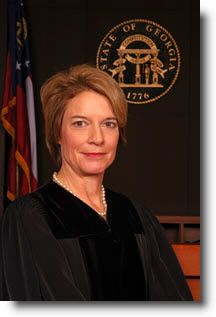
During an interview on WSB TV Chief Judge Wright said the recent dismissal of a murder case due to the length of time it had been pending was because of the specific facts in that case.
“The length of time a case is pending does not necessarily require dismissal because cases can grow old due to a variety of reasons, including incompetency to stand trial, appeals, motions and other case-related issues,” Chief Judge Wright said.
In fact, Judge Wright said, the Fulton Superior Court has continued to make significant progress in reducing the number of pending murder cases by completing 57 cases since January, leaving the Court with a total of 179 active murder cases.
Overall, felony caseloads have been reduced in the past four years, Judge Wright said.
One reason for the reduction: the Court instituted a Felony Fast-Track case-management program.
This joint effort of the Court, the Fulton District Attorney, and Fulton Public Defender deals with all nonviolent drug and property crimes – which comprise more than 70 percent of all felony indictments in Fulton - in nine weeks from arrest to conclusion. And, less than 1 percent of those cases require trial, further saving court time and tax dollars. Since Felony Fast-Track began in 2006, the court’s inventory of these type cases has been reduced by 40 percent.
A new pilot project agreed to by the DA and Public Defender will expand the rigid case management standards of Felony Fast-Track to new felony cases has been in development for several months, Wright said.
The case management plan was the result of a two-day seminar last fall organized by the Court and led by national case management experts. The seminar, attended by the Fulton County District Attorney, Fulton’s Public Defender, Superior Court Judges, Clerk of Court and members of their respective staffs, led to creation of the case management plan being implemented.
The plan will include 10 of the Court’s 20 judges and will operate under a memorandum of understanding agreed to by the District Attorney, Public Defender and other justice system partners. Under the expanded case standards plan murder and other serious violent felonies will be concluded within 48 weeks of indictment. All other crimes against persons felonies will be processed within 36 weeks of Indictment, Wright said.
The Fulton judicial system does face challenges due to a lack of funding that affects every agency, Wright said. A new unified computer system, a 10-year campaign that was approved this year, will go a long way toward streamlining the state’s largest judicial system, but more has to be done to bring the system up to the demands of civil and criminal cases, she said.
More money must be allocated for all justice agencies so they have adequate staff to process the large volume of civil and criminal cases in Fulton, she said.
The Superior Court must not focus exclusively on criminal cases because the Court has other Constitutionally mandated obligations to process civil cases, including domestic litigation involving families and children, Wright said.
Balancing those multiple responsibilities and increasing coordination with other justice agencies to achieve maximum efficiency is a goal that Wright has set for her two-year term as Chief Judge.
Friday, June 11, 2010
Clearing the Backlog
Read about how our Court is innovating ways to improve access to justice and enhance public safety by resolving older cases.

________________________________________
Friday, June 11, 2010
Fulton clears 239 backlogged cases
Federally funded program helps save money and resolve cases that have been stalled for at least one year
By Greg Land, Staff Reporter
In a near-empty Fulton County courtroom, Northeastern Circuit Senior Judge John E. Girardeau listened attentively as Public Defender Richard W. Marks summed up his case: no 911 tapes, no "independent" witnesses—true, the assault victim had been photographed with bruises on her face, but she may have inflicted the injuries to herself in order to frame her boyfriend, to "pay him back" for cheating on her.
Rising to deliver his own closing remarks, Fulton County Assistant District Attorney David J. Studdard dismissed Marks' arguments as "preposterous" and expressed astonishment that his opponent could make them with a straight face.
Girardeau then issued his instructions to the jury, sending them out to deliberate as one more of the county's backlogged cases ground toward an end.
One of eight senior judges assigned to the Superior Court's Backlog Reduction Program, Girardeau had first become involved in State v. Stewart just two days earlier. Pretrial motions, plea negotiations and witness issues had all been ironed out earlier.
"When they say it's scheduled for trial week, you can count on it being ready for trial," said Girardeau, who took senior status in 2005.
"That's different from a judge handling a regular calendar, where there often other things that can cause delays," he said.
Since last September, the program has led to resolution of 239 complex felony cases that had left nearly 189 criminal defendants languishing in the Fulton County Jail for more than a year—often much longer than that, according to Fulton County Superior Court statistics.
Funded by $1.2 million in federal stimulus money, the program has churned through the backlog mainly through plea deals, with the toughest cases going to trial before designated teams of prosecutors, defense attorneys, judges and support staff.
The cumulative total for the amount of time those defendants spent in jail before trial: 83,294 days, or more than 228 years, according to the court.
"These are people who have been sitting in jail at a cost of $72 a day," said Fulton County Superior Court Senior Judge Stephanie B. Manis, "while I understand it costs about $40 a day to keep them in state prison." She was citing data from Fulton County Sheriff Theodore "Ted" Jackson.
While saving the county taxpayers money by moving the cases is important, noted Manis, it's also important to resolve the cases in the interest of justice: There have been some not-guilty verdicts, and several of the cases—mostly those involving lower mandatory minimum sentences or lower-level felonies—have been dead-docketed.
Manis has been overseeing the program since its inception, and before that had been working on another backlog case project.
The cases, some of which involve defendants who have been jailed since 2006, fall into four categories:
•murder;
•mandatory plus, in which convictions on charges including aggravated child molestation, aggravated sexual battery, aggravated sodomy, kidnapping with bodily injury, kidnapping a victim under 14 years of age and rape are punishable by a mandatory minimum 25 years in prison;
•mandatory, in which convictions for armed robbery, hijacking, kidnapping, trafficking and offenses that require inclusion upon Georgia's sex offender registry are punishable by a mandatory minimum 10 years in prison; and
•other, which includes offenses such as aggravated assault and aggravated battery, punishable by one to 20 years in prison, and child molestation, punishable by five to 20 years, among others.
Manis said several factors contribute to these "tough to resolve" cases.
"I think you have a higher number of cases with defendants with mental health issues," she said. "There are a large number of crimes against women and children, and a larger number of cases with the high mandatory sentences."
As the General Assembly has steadily increased such sentences and the number of crimes to which they apply, she said, defendants are more likely to roll the dice on a jury trial than to accept a plea.
"With these 25- and 30-year sentences, there's much less advantage to someone going on the record and expressing remorse," she said. "We predict about 80 percent will go to trial."
Other reasons for the backlog involve cases with multiple defendants and attorneys, cases that are on appeal or those that have already resulted in a mistrial. But Manis said the most common reason cited for the dust-gathering cases is "court congestion."
Manis has drawn upon several years' worth of a court consultant's recommendations for criminal case management to put together her own informal bench book and recommendations for the lawyers, judges and staff who work the backlog cases.
She has so far relegated the actual trials to the other judges, busying herself with reviewing cases, hearing motions and conducting meetings, disposing of the cases she can and getting the others ready for trial so a judge can simply walk into court and begin voir dire.
"I talk to everybody," she said, telling the backlog defendants and the victims, "it's taking a long time, and we need move this case along."
The Georgia Legislature has slashed most state funding for senior judges, and Superior Court Administrator Judith Cramer credits officials in Fulton municipalities for letting some of their own federal funds be used for the project.
"It wouldn't have been possible without the chiefs of police, city managers and council members of the Fulton County cities," said Cramer, explaining that the funds came from a federal Justice Assistance Grant to the cities last year.
"The money was to be shared with law enforcement. I met with a group of [city officials] and asked if they'd give me some of their money," said Cramer.
While funds have been made available nationwide to hire more police officers, "judges, prosecutors, public defenders and clerks are often left out of the equation," she said. "But the more boots on the ground, the more arrests are made."
Cramer likened the resulting surge in arrests on already swollen criminal dockets to a snake eating a large animal.
"You've got this large lump moving through the snake, and what you've got is a snake with indigestion," she said.
With total funding of $1,235,493, the program pays for 20 positions, incuding two senior judges and a three-member staff; two senior prosecutors, two investigators and a legal assistant; three public defenders and a defense investigator; four staff members from the clerk of the Superior Court's office and two staff members from the Sheriff's Department.
The judges' duties rotate between Manis, Girardeau and Senior Fulton County Judges Isaac Jenrette and Elizabeth E. Long; Senior Cobb County Judge Michael Stoddard; and Senior DeKalb County Judges Robert P. Mallis and Anne Workman. Senior Cherokee Circuit Superior Court Judge Tom Pope was originally involved but has since withdrawn, said Manis.
The program was staffed and operational in September, and Cramer said that the funding is projected to run out about mid-December. After that, she's hoping the county, state and/or federal governments might be willing to help keep it alive.
The program gets high marks from those involved.
"One of the great things about the backlog program is that we're able to jump right on our clients' cases," said Marks, the public defender in the case before Girardeau who is one of three Fulton County public defenders assigned to the program.
The ability to have cases prepared by one judge then, if necessary, sent to another for trial enables quick handling, said Marks.
"Our job is to make sure that everything that has to be done is done," he said, "as opposed to just letting them just keep sitting on the shelf."
While the public defenders handle most of the cases, he said, "everything's on a case-by-case basis. In some cases, the original attorney on the case [whether assigned or private], will come to backlog and represent the defendant. In others, the original lawyer will pass his file to us. There's no bright-line rule."
The state has provided seasoned prosecutors, and the cases move as smoothly as can be expected, said Marks.
"No system is perfect," said Marks, "but [the program] does a great job, and the goals set out have been attained."
Prosecutor Studdard deferred comment to Fulton County District Attorney Paul L. Howard Jr., who lauded the program even as he repeated his own complaints about the handling of cases in the Superior Court.
"My assessment is that Judge Manis and the lawyers and the PDs have done an outstanding job," said Howard. "A lot of the credit goes to Judge Manis, who has single-handedly engineered this effort to reduce the backlog cases."
But Howard—who has seen a string of criminal cases fall apart when defendants sought speedy trial dismissals, often in cases in which multiple judges have been assigned a case as the years tick by—said there still need to be courtwide standards for handling cases.
Howard acknowledges that the court has adopted several innovations that have streamlined case-flow to some extent, including specialty courts designed to weed out defendants who have drug and mental health issues; a fast-track program to move lower-level drug and property crime cases swiftly; and a recent pilot program to create separate criminal and civil divisions in the Superior Court.
"This is the fourth backlog effort we have been involved in," said Howard. "Even though this is successful, the number of people in the backlog cases and the number of people in jail remains relatively the same."
Howard called for "an organizational change that will affect the superior, state and magistrate courts, all attacking the same priorities: the numbers of people in jail and awaiting trial.
"Second," he said, "all of the cases in our superior court system should be tried within a certain number of days."
While the criminal justice system in Fulton does suffer from a lack of sufficient resources, he said, "I regard those questions about resources being anecdotal. Unless there is an organizational approach, there will not be overall change. Activity is not the same as achievement."
Cramer, who recently announced she would leave her post, said that one of the goals of the project is to set precisely such goals and caseload standards, which can then be adopted by the entire Fulton County bench.
"The problem now is setting up the system so it doesn't happen again," she said. "We want to develop standards relating to case management. We already have standards for fast-track felonies, but it's much more difficult for the complex cases."
Even so, she noted, there are 19—soon to be 20—elected judges on the Superior Court bench, and "as in any legal culture, there will be specific areas of concern," she said.
"And we simply do not have enough judges, DAs or PDs," she said. "It's a good program, but it won't solve the problem. We have 19 judges now; we need 32 just to do the job."
Fulton County Superior Court Chief Judge Cynthia D. Wright said the court has requested $140,000 in additional funds from the county to continue the program. The request was among several from the county's justice system that were removed from the Fulton County Commission's June 2 agenda; according to Fulton County Superior Court spokesman Don Plummer, it will again be on the agenda for the June 16 meeting.
"We continue to explore other possible avenues for continued funding of the backlog," said Wright via an e-mail.
Howard said he, too, is hoping to keep the program alive.
Lengthy delays are "unfair for defendants, and even more unfair for victims," he said.

________________________________________
Friday, June 11, 2010
Fulton clears 239 backlogged cases
Federally funded program helps save money and resolve cases that have been stalled for at least one year
By Greg Land, Staff Reporter
In a near-empty Fulton County courtroom, Northeastern Circuit Senior Judge John E. Girardeau listened attentively as Public Defender Richard W. Marks summed up his case: no 911 tapes, no "independent" witnesses—true, the assault victim had been photographed with bruises on her face, but she may have inflicted the injuries to herself in order to frame her boyfriend, to "pay him back" for cheating on her.
Rising to deliver his own closing remarks, Fulton County Assistant District Attorney David J. Studdard dismissed Marks' arguments as "preposterous" and expressed astonishment that his opponent could make them with a straight face.
Girardeau then issued his instructions to the jury, sending them out to deliberate as one more of the county's backlogged cases ground toward an end.
One of eight senior judges assigned to the Superior Court's Backlog Reduction Program, Girardeau had first become involved in State v. Stewart just two days earlier. Pretrial motions, plea negotiations and witness issues had all been ironed out earlier.
"When they say it's scheduled for trial week, you can count on it being ready for trial," said Girardeau, who took senior status in 2005.
"That's different from a judge handling a regular calendar, where there often other things that can cause delays," he said.
Since last September, the program has led to resolution of 239 complex felony cases that had left nearly 189 criminal defendants languishing in the Fulton County Jail for more than a year—often much longer than that, according to Fulton County Superior Court statistics.
Funded by $1.2 million in federal stimulus money, the program has churned through the backlog mainly through plea deals, with the toughest cases going to trial before designated teams of prosecutors, defense attorneys, judges and support staff.
The cumulative total for the amount of time those defendants spent in jail before trial: 83,294 days, or more than 228 years, according to the court.
"These are people who have been sitting in jail at a cost of $72 a day," said Fulton County Superior Court Senior Judge Stephanie B. Manis, "while I understand it costs about $40 a day to keep them in state prison." She was citing data from Fulton County Sheriff Theodore "Ted" Jackson.
While saving the county taxpayers money by moving the cases is important, noted Manis, it's also important to resolve the cases in the interest of justice: There have been some not-guilty verdicts, and several of the cases—mostly those involving lower mandatory minimum sentences or lower-level felonies—have been dead-docketed.
Manis has been overseeing the program since its inception, and before that had been working on another backlog case project.
The cases, some of which involve defendants who have been jailed since 2006, fall into four categories:
•murder;
•mandatory plus, in which convictions on charges including aggravated child molestation, aggravated sexual battery, aggravated sodomy, kidnapping with bodily injury, kidnapping a victim under 14 years of age and rape are punishable by a mandatory minimum 25 years in prison;
•mandatory, in which convictions for armed robbery, hijacking, kidnapping, trafficking and offenses that require inclusion upon Georgia's sex offender registry are punishable by a mandatory minimum 10 years in prison; and
•other, which includes offenses such as aggravated assault and aggravated battery, punishable by one to 20 years in prison, and child molestation, punishable by five to 20 years, among others.
Manis said several factors contribute to these "tough to resolve" cases.
"I think you have a higher number of cases with defendants with mental health issues," she said. "There are a large number of crimes against women and children, and a larger number of cases with the high mandatory sentences."
As the General Assembly has steadily increased such sentences and the number of crimes to which they apply, she said, defendants are more likely to roll the dice on a jury trial than to accept a plea.
"With these 25- and 30-year sentences, there's much less advantage to someone going on the record and expressing remorse," she said. "We predict about 80 percent will go to trial."
Other reasons for the backlog involve cases with multiple defendants and attorneys, cases that are on appeal or those that have already resulted in a mistrial. But Manis said the most common reason cited for the dust-gathering cases is "court congestion."
Manis has drawn upon several years' worth of a court consultant's recommendations for criminal case management to put together her own informal bench book and recommendations for the lawyers, judges and staff who work the backlog cases.
She has so far relegated the actual trials to the other judges, busying herself with reviewing cases, hearing motions and conducting meetings, disposing of the cases she can and getting the others ready for trial so a judge can simply walk into court and begin voir dire.
"I talk to everybody," she said, telling the backlog defendants and the victims, "it's taking a long time, and we need move this case along."
The Georgia Legislature has slashed most state funding for senior judges, and Superior Court Administrator Judith Cramer credits officials in Fulton municipalities for letting some of their own federal funds be used for the project.
"It wouldn't have been possible without the chiefs of police, city managers and council members of the Fulton County cities," said Cramer, explaining that the funds came from a federal Justice Assistance Grant to the cities last year.
"The money was to be shared with law enforcement. I met with a group of [city officials] and asked if they'd give me some of their money," said Cramer.
While funds have been made available nationwide to hire more police officers, "judges, prosecutors, public defenders and clerks are often left out of the equation," she said. "But the more boots on the ground, the more arrests are made."
Cramer likened the resulting surge in arrests on already swollen criminal dockets to a snake eating a large animal.
"You've got this large lump moving through the snake, and what you've got is a snake with indigestion," she said.
With total funding of $1,235,493, the program pays for 20 positions, incuding two senior judges and a three-member staff; two senior prosecutors, two investigators and a legal assistant; three public defenders and a defense investigator; four staff members from the clerk of the Superior Court's office and two staff members from the Sheriff's Department.
The judges' duties rotate between Manis, Girardeau and Senior Fulton County Judges Isaac Jenrette and Elizabeth E. Long; Senior Cobb County Judge Michael Stoddard; and Senior DeKalb County Judges Robert P. Mallis and Anne Workman. Senior Cherokee Circuit Superior Court Judge Tom Pope was originally involved but has since withdrawn, said Manis.
The program was staffed and operational in September, and Cramer said that the funding is projected to run out about mid-December. After that, she's hoping the county, state and/or federal governments might be willing to help keep it alive.
The program gets high marks from those involved.
"One of the great things about the backlog program is that we're able to jump right on our clients' cases," said Marks, the public defender in the case before Girardeau who is one of three Fulton County public defenders assigned to the program.
The ability to have cases prepared by one judge then, if necessary, sent to another for trial enables quick handling, said Marks.
"Our job is to make sure that everything that has to be done is done," he said, "as opposed to just letting them just keep sitting on the shelf."
While the public defenders handle most of the cases, he said, "everything's on a case-by-case basis. In some cases, the original attorney on the case [whether assigned or private], will come to backlog and represent the defendant. In others, the original lawyer will pass his file to us. There's no bright-line rule."
The state has provided seasoned prosecutors, and the cases move as smoothly as can be expected, said Marks.
"No system is perfect," said Marks, "but [the program] does a great job, and the goals set out have been attained."
Prosecutor Studdard deferred comment to Fulton County District Attorney Paul L. Howard Jr., who lauded the program even as he repeated his own complaints about the handling of cases in the Superior Court.
"My assessment is that Judge Manis and the lawyers and the PDs have done an outstanding job," said Howard. "A lot of the credit goes to Judge Manis, who has single-handedly engineered this effort to reduce the backlog cases."
But Howard—who has seen a string of criminal cases fall apart when defendants sought speedy trial dismissals, often in cases in which multiple judges have been assigned a case as the years tick by—said there still need to be courtwide standards for handling cases.
Howard acknowledges that the court has adopted several innovations that have streamlined case-flow to some extent, including specialty courts designed to weed out defendants who have drug and mental health issues; a fast-track program to move lower-level drug and property crime cases swiftly; and a recent pilot program to create separate criminal and civil divisions in the Superior Court.
"This is the fourth backlog effort we have been involved in," said Howard. "Even though this is successful, the number of people in the backlog cases and the number of people in jail remains relatively the same."
Howard called for "an organizational change that will affect the superior, state and magistrate courts, all attacking the same priorities: the numbers of people in jail and awaiting trial.
"Second," he said, "all of the cases in our superior court system should be tried within a certain number of days."
While the criminal justice system in Fulton does suffer from a lack of sufficient resources, he said, "I regard those questions about resources being anecdotal. Unless there is an organizational approach, there will not be overall change. Activity is not the same as achievement."
Cramer, who recently announced she would leave her post, said that one of the goals of the project is to set precisely such goals and caseload standards, which can then be adopted by the entire Fulton County bench.
"The problem now is setting up the system so it doesn't happen again," she said. "We want to develop standards relating to case management. We already have standards for fast-track felonies, but it's much more difficult for the complex cases."
Even so, she noted, there are 19—soon to be 20—elected judges on the Superior Court bench, and "as in any legal culture, there will be specific areas of concern," she said.
"And we simply do not have enough judges, DAs or PDs," she said. "It's a good program, but it won't solve the problem. We have 19 judges now; we need 32 just to do the job."
Fulton County Superior Court Chief Judge Cynthia D. Wright said the court has requested $140,000 in additional funds from the county to continue the program. The request was among several from the county's justice system that were removed from the Fulton County Commission's June 2 agenda; according to Fulton County Superior Court spokesman Don Plummer, it will again be on the agenda for the June 16 meeting.
"We continue to explore other possible avenues for continued funding of the backlog," said Wright via an e-mail.
Howard said he, too, is hoping to keep the program alive.
Lengthy delays are "unfair for defendants, and even more unfair for victims," he said.
Subscribe to:
Posts (Atom)


 Posts
Posts

